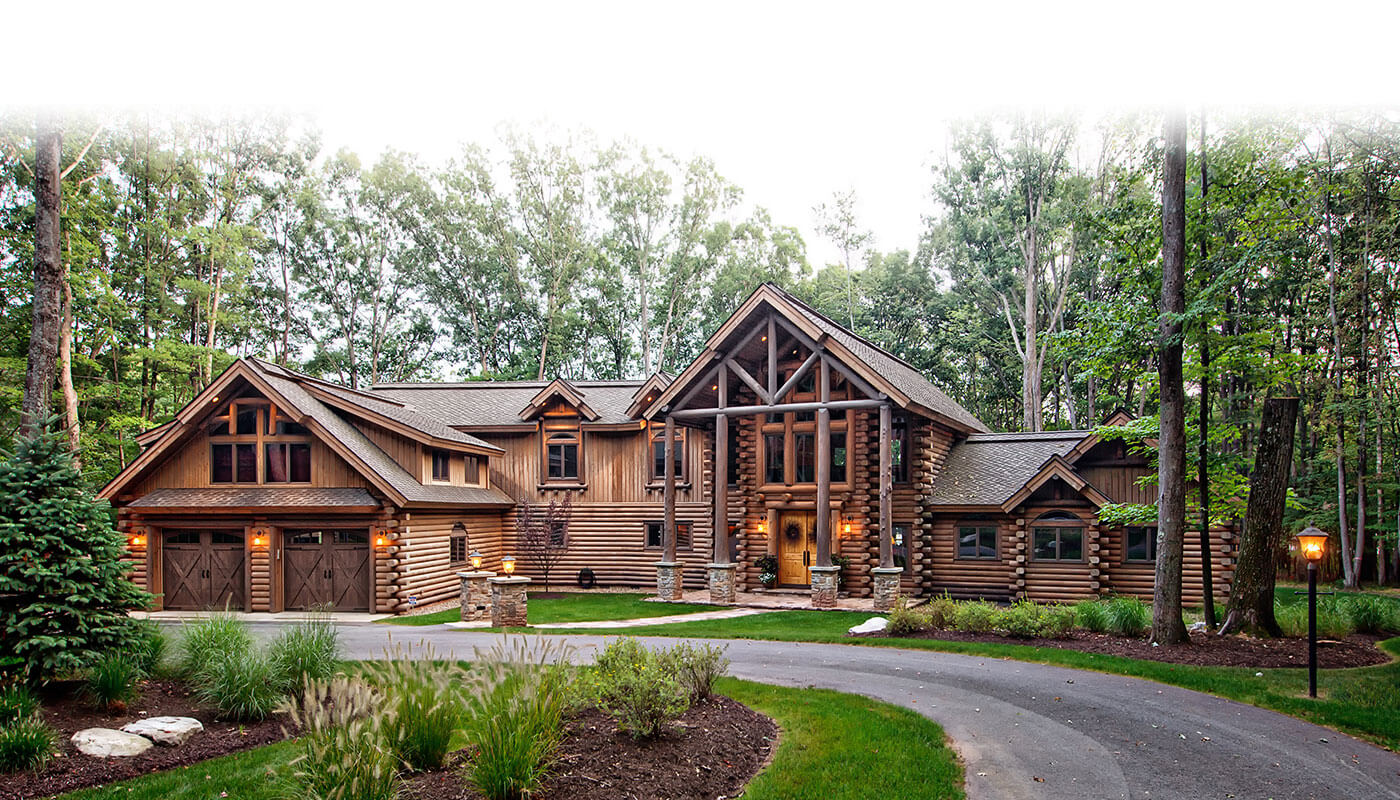
When clients begin planning a custom home, one of the first questions they often ask is, “What’s the cost per square foot?”
It’s a logical question. Square footage feels measurable and comparable. Bigger house, higher cost. Smaller house, lower cost. In reality, cost per square foot is one of the least reliable ways to estimate true turnkey costs, especially for custom homes built on site-specific land in the Northeast.
Here’s why.
Not All Costs Scale Linearly With Square Footage
Many of the most significant costs in a custom home are driven by site conditions, infrastructure requirements, and layout decisions rather than interior square footage alone.
Items like septic systems, excavation and blasting, driveways and access, utility runs, and mechanical and electrical infrastructure exist whether a home is modest in size or expansive.
These costs do not increase in a simple, predictable way as square footage grows. In some cases, they may remain relatively consistent. In others, they may increase significantly depending on where and how the home is built.
How Site and Footprint Affect Cost
Footprint is often a larger cost driver than total square footage.
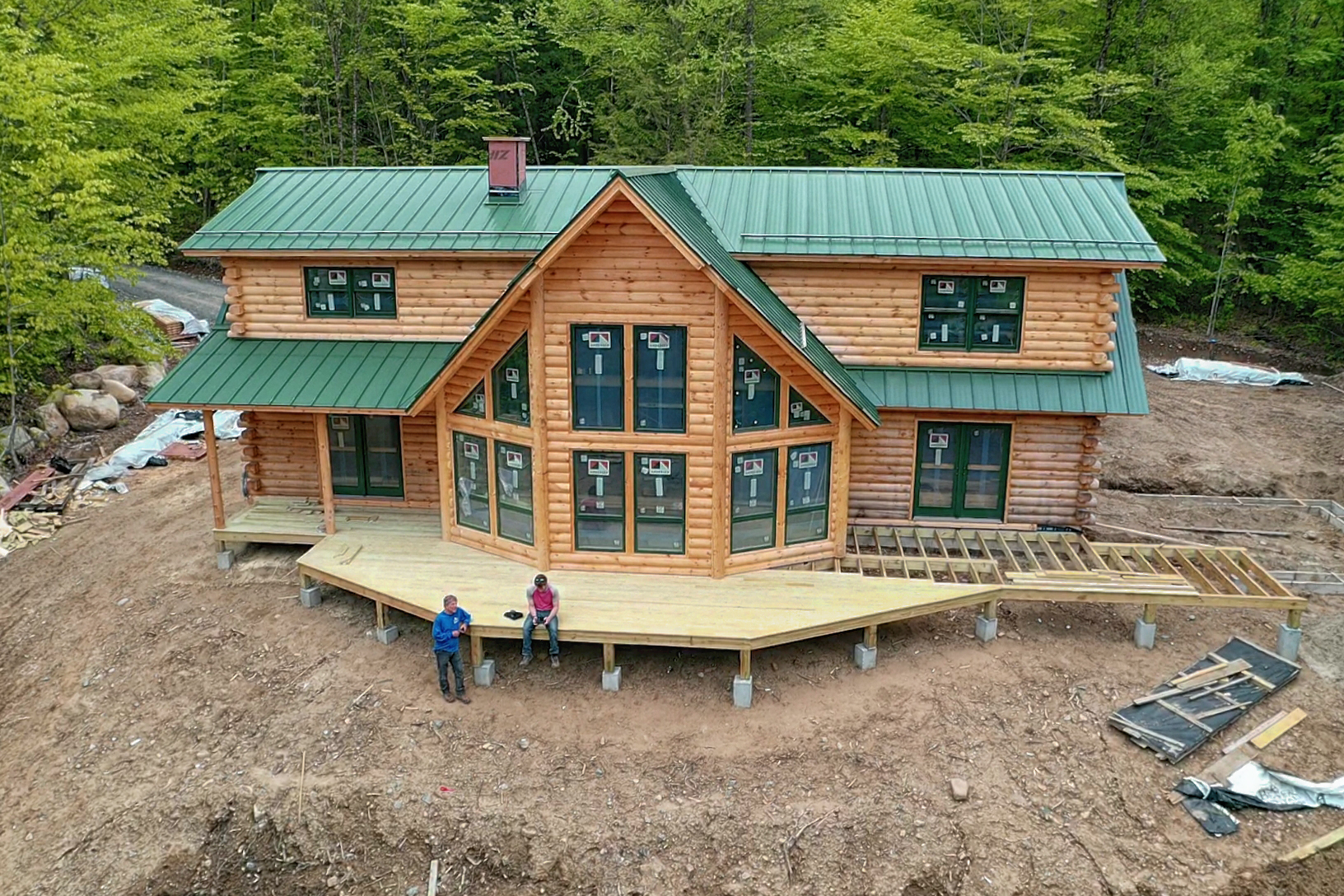
A larger footprint can mean more excavation and foundation work, longer utility and mechanical runs, increased grading, and greater site disturbance. For example, a single-story ranch-style home may have the same square footage as a two-story home, but its wider footprint can drive higher costs for excavation, foundation, and site work.
In contrast, a two-story home with a smaller footprint may reduce foundation and site work scope, even though the total square footage is higher.
Design Complexity Matters More Than Size
Design choices also play a major role in overall cost.
Elements such as vaulted ceilings and long structural spans, large expanses of glass, custom detailing, integrated outdoor living spaces, and overall architectural complexity can significantly influence budget.
A 2,000 square foot home with varied rooflines, a single-level plan, and a rural site location may show a higher cost per square foot than a 4,000 square foot home with a simpler form and fewer site challenges. Fixed and semi-fixed costs are spread across fewer square feet, and the smaller home may carry higher complexity or performance goals.
This is why comparing cost per square foot without considering footprint, site conditions, and layout can lead to misleading conclusions.
Fixed and Semi-Fixed Costs Still Matter
While some costs, such as septic systems and excavation, can increase as a home grows, many components include baseline costs that exist regardless of size.
Septic systems must meet minimum design and permitting requirements even for smaller homes. Excavation often includes mobilization, access preparation, and initial earthwork before square footage meaningfully changes the scope. Appliances, service connections, and mechanical systems all carry baseline costs that do not scale evenly with size.
When these baseline costs are spread across fewer square feet in a smaller home, the cost per square foot often appears higher.
Why True Cost Per Square Foot Is a Backward-Looking Metric
Another important nuance is that true turnkey cost per square foot can only be calculated after a home is completed.
Until construction is finished, costs are influenced by final site conditions, field decisions, material availability, and coordination between trades. The final number reflects what was actually built, not what was estimated early in the process.
For that reason, cost-per-square-foot figures are best understood as historical data points, not predictive tools.
A Better Way to Think About Turnkey Costs
At Beaver Mountain, we don’t begin cost conversations with square footage alone.
Instead, we evaluate the characteristics and constraints of the land, required infrastructure and utilities, footprint and building form, structural and performance goals, and lifestyle priorities that influence layout and detailing.
This planning-first approach allows us to identify where costs are fixed, where they may increase with scale, and where design decisions can meaningfully affect budget early in the process.
The Takeaway
Cost per square foot can be a helpful reference point, but it should never be the foundation of a turnkey budget.
Smaller homes are not automatically cheaper per square foot. Larger homes are not automatically more expensive. Footprint, site conditions, and design decisions often matter far more than total square footage alone.
The most accurate cost conversations start with the land, the layout, and the systems required to build well on a specific site. That clarity is what allows clients to move forward with confidence.
If you’d like to learn more about custom home budgeting and costs in the Northeast, give our team a call at 607-467-2700. We’d love to meet you.